
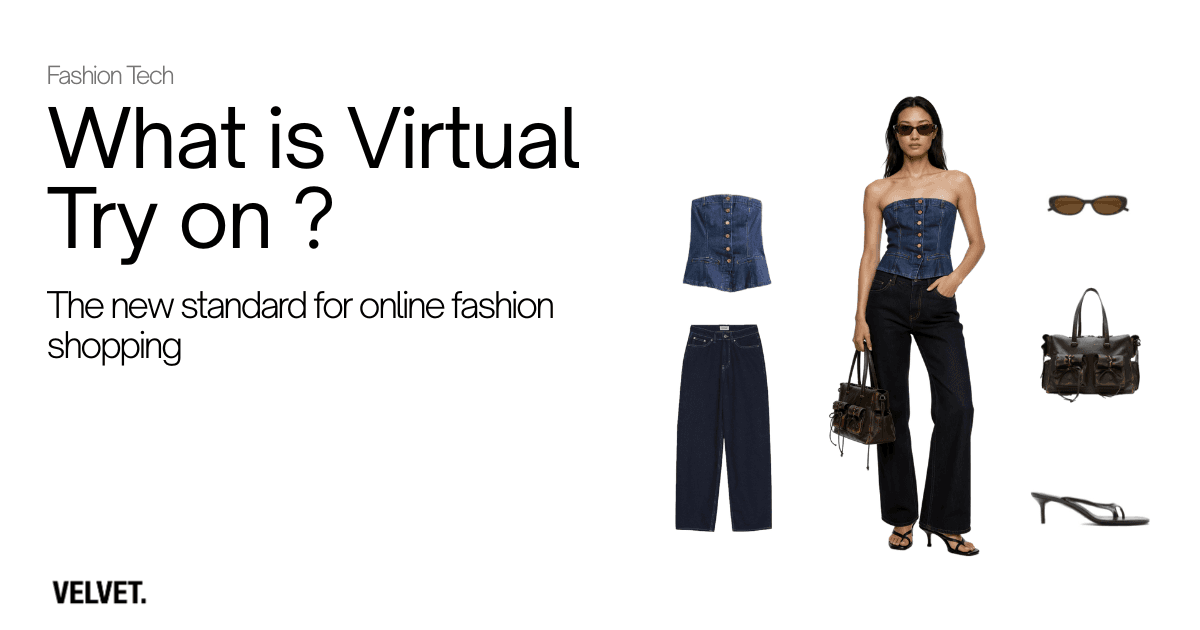
What is Virtual Try-On? The new standard for online fashion shopping
Virtual try-on uses AI to show how clothes look on your body before buying. Here is how the technology works, who the main players are, and why it matters for fashion.
Online fashion has a trust problem.
Virtual try-on uses AI and computer vision to show how clothes look on your body before you buy, think of it as a fitting room that lives inside your phone. Retail is staggering under the weight of returns; in the U.S. alone, the National Retail Federation reported consumers sent back more than $816 billion in merchandise in 2022 (NRF), with apparel among the hardest-hit categories.
If you want the shorter category overview first, Velvet's virtual try-on page explains how the term connects to live product discovery, AI styling, and click-through shopping.
When the bar for “good enough” shopping is a two-day delivery window, virtual try-on is one of the few levers that actually attacks the why behind the box going back: you could not trust what you saw on screen.
How virtual try-on works
At a high level, the stack is detection, mapping, and rendering: software finds your body in space, warps the garment’s mesh or texture so hems and sleeves obey plausible rules, then paints light and shadow so the preview reads as a single photograph instead of a sticker.
Early demos looked like AR masks; today’s pipelines borrow from games and generative models so fabric weight and fold lines behave more like reality—still imperfect, but no longer a punchline. For a generation that grew up screenshotting fits before they buy, virtual try-on is the difference between guessing from a flat lay and actually seeing proportion on a body like theirs.
Think of it like dubbing a film: the garment is the dialogue, your body is the actor, and the renderer is the studio making them feel like they were always in the same shot. When the chain is lazy—generic mannequin, flat lighting, ten-second loads—the magic dies. When it is tuned, “add to cart” stops feeling like a blind bet.
VELVET uses a system called the Digital Double—a body-accurate avatar built from your photo that garments are mapped onto in real time. The point is not a cartoon self; it is a preview that respects your proportions so the experience answers how will this sit on me, not how will this sit on a campaign model.
The virtual try-on landscape: who is doing it
ALTA (often surfaced as Alta Daily) has leaned into the “AI closet” story: detailed avatar, optional full-body selfie, fast renders, plus wardrobe organization and styling suggestions layered on top. Where some apps ship a single hero demo, ALTA wants the loop to feel daily—closer to scrolling a feed than waiting on a progress bar.
Doji went upmarket: a photorealistic likeness from a handful of photos, designer inventory, a Safari extension to pull pieces from around the web, and social sharing baked in. The experience targets people who treat fashion as identity, not just utility.
Vue.ai plays enterprise retail: visual merchandising, tagging, and try-on-adjacent modules brands plug into their own storefronts. You may never download “Vue.ai,” but you have likely experienced flows powered by that kind of middleware.
Most players in virtual try-on fall into three buckets:
- Visualization tools (better mirrors)
- Retail integrations (better storefronts)
- Luxury experiences (better identity play)
VELVET is built for how people want to shop now: mobile-first discovery, body-accurate preview, and agentic search that remembers context. The Digital Double anchors trust; conversation handles intent.
But VELVET is not just a virtual try-on tool—it is a personal AI shopping agent. Where most platforms stop at showing you clothes, VELVET is designed to help you decide: what fits your body, your style, and your moment.
Beyond that, the VELVET agent can act on your behalf. It continuously learns your preferences and evolving taste—surfacing outfits, deals, and relevant finds even when you are not actively searching. Instead of starting from zero every time, your wardrobe experience becomes persistent and proactive.
If the field splits between luxury experiences, retailer tools, and endless product feeds, VELVET is building something different: a personal fashion operating system—a layer that connects discovery, try-on, and decision-making into one continuous experience.
Beyond virtual try-on: the rise of the personal fashion OS
Virtual try-on is only one piece of a much larger shift. The real transformation in fashion is not just better visualization—it is better decision-making.
What is missing is a system that connects these approaches into a single loop.
Today’s tools either show you clothes, sell you clothes, or inspire you—but they rarely help you decide.
This is where a new category emerges: the personal fashion operating system—an AI layer that understands your body, your preferences, and your context, and helps you go from idea → preview → decision instantly.
What is missing is a system that connects all three into a single loop.
This is where a new category emerges: the personal fashion operating system—an AI layer that understands your body, your preferences, and your context, and helps you go from idea → preview → decision instantly.
VELVET is built for that layer.
Why the returns problem makes this critical
Returns are a structural tax, not a customer-service footnote. That $816 billion figure captures how much merchandise flows backward—not hypothetically, but in trucks and boxes (NRF).
Fashion over-indexes because fit, hand-feel, and color are brutal to judge on a five-inch screen. Surveys routinely put fit and sizing near the top of why apparel goes back.
Every round trip is double shipping, double packaging, and often landfill or incineration when resale fails. Virtual try-on is not a silver bullet—but it directly targets the preventable mistakes.
What makes a good virtual try-on experience
First, body accuracy across sizes: tech that only flatters a narrow range of bodies is not useful at scale.
Second, garment realism: fabric should behave—denim should feel structured, knits should relax, silhouettes should read naturally.
Third, speed: anything that lags breaks the experience.
Fourth, real shopping integration: previews must connect to actual purchasing decisions—not just visuals.
The future of virtual try-on
Generative video, richer 3D, and on-device inference will keep raising the ceiling, but the story is not “more pixels”—it is confidence: fewer surprises, more informed decisions, and less guesswork.
Virtual try-on is not the destination—it is the interface.
The real shift is toward systems that understand what you want, show it on you, and help you decide instantly. Discovery, fitting, and styling are collapsing into a single intelligent loop.
That is where fashion is going.
And that is what VELVET is building.
FAQ: Virtual Try-On
What is virtual try-on in fashion?
Virtual try-on is a technology that uses AI and computer vision to simulate how clothing will look on a person’s body before purchase.
How accurate is virtual try-on?
Accuracy depends on the system. Advanced solutions use body-aware models and garment simulation, but results can still vary.
Does virtual try-on reduce returns?
Yes—especially for fit-related returns. It helps shoppers make more informed decisions before purchasing.
What is the difference between AR try-on and AI try-on?
AR try-on overlays items in real-time using a camera, while AI try-on generates more realistic previews based on photos or avatars.
Keep reading
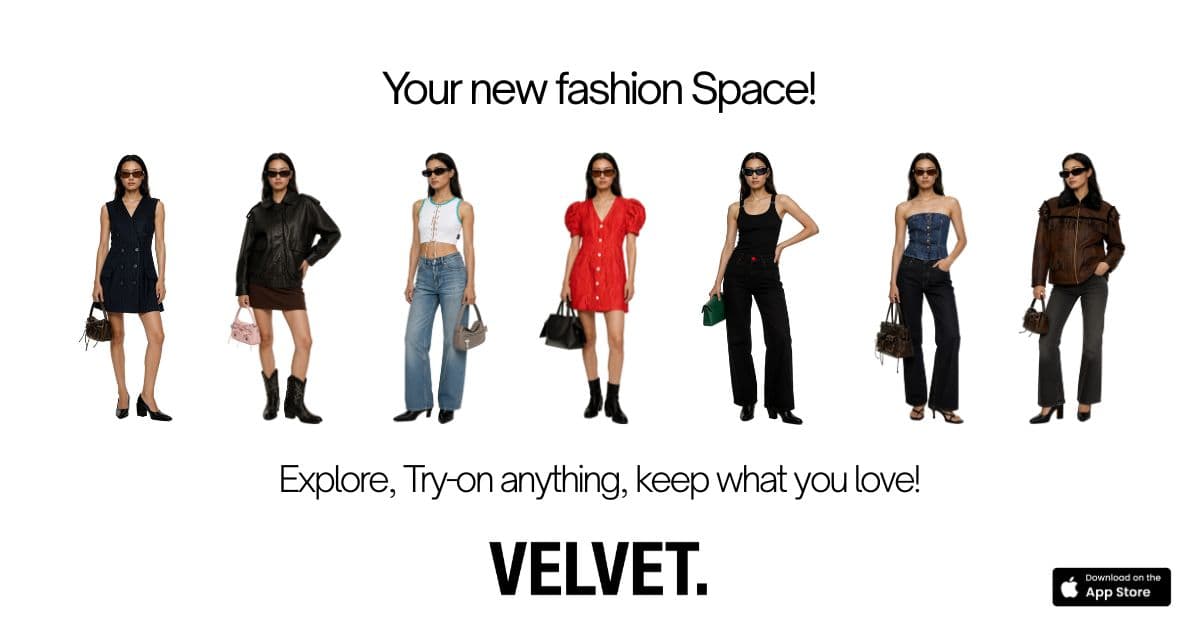
Digital Double vs Avatar: Why Precision Wins
A Digital Double is a body-accurate model for fashion preview—not a cartoon avatar. Compare approaches and why precision drives confidence at checkout.
2 min read ·
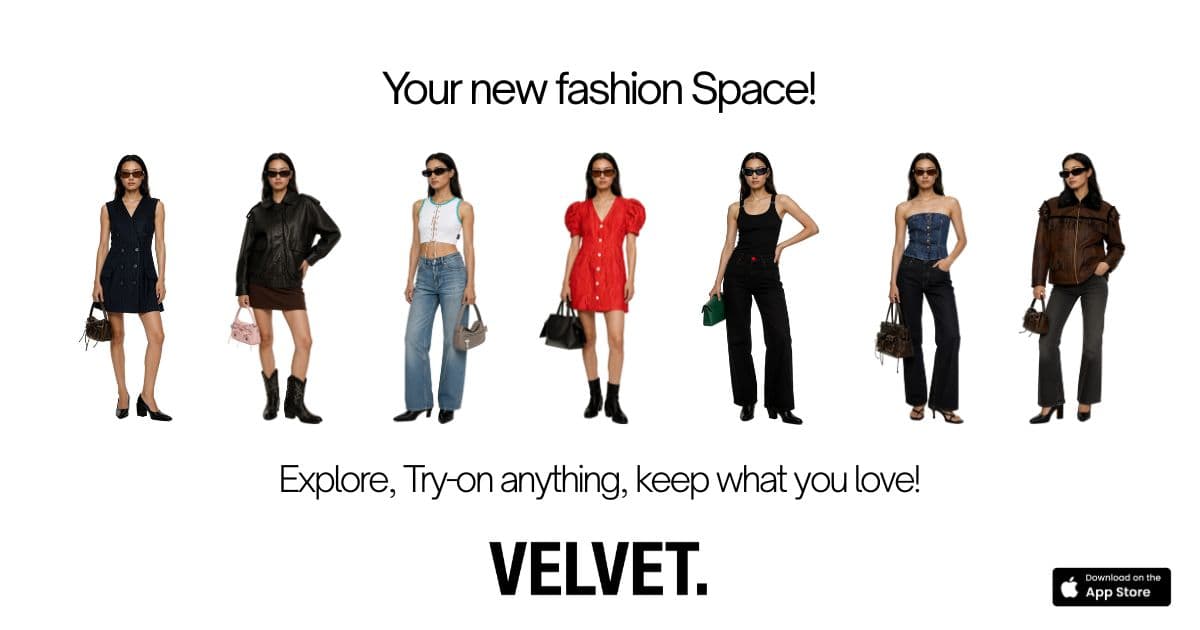
How to choose an outfit planner app
The best outfit planner apps make everyday what-to-wear decisions easier by combining wardrobe context, outfit building, and shopping support.
2 min read ·
What does an AI stylist actually do?
An AI stylist helps translate your taste, occasion, and budget into more relevant outfit and product suggestions.
2 min read ·